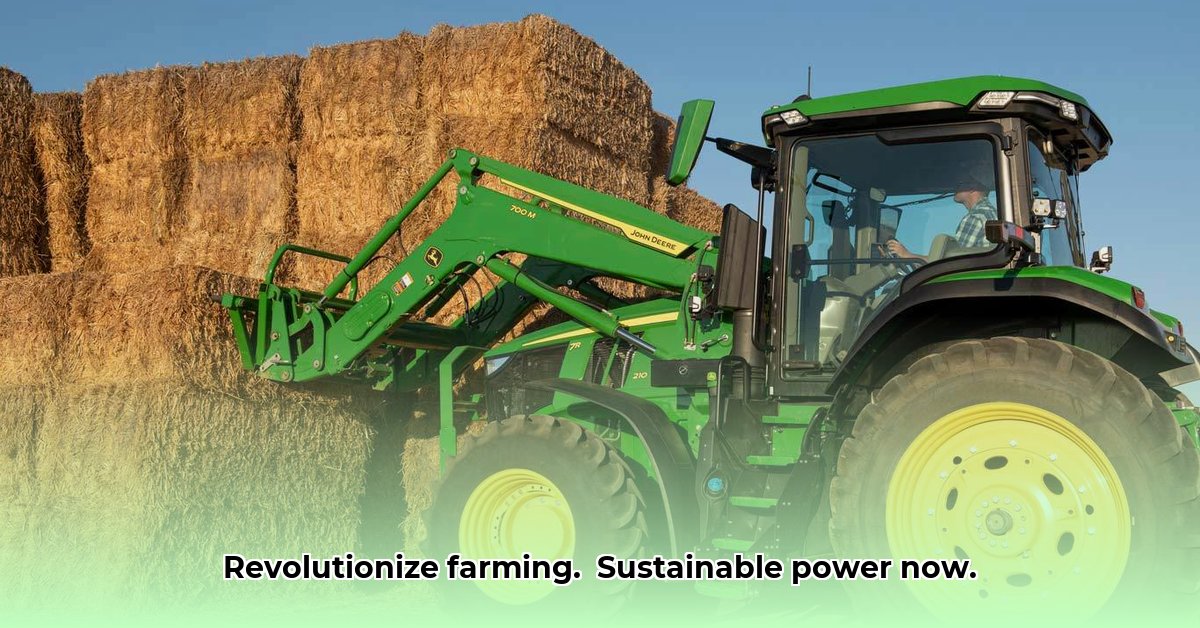
Boosting Sustainable Farming Practices with the JD Loader Tractor
Sustainable agriculture demands efficiency and environmental responsibility. The John Deere (JD) loader tractor emerges as a powerful tool in this transition, optimizing farm operations to minimize environmental impact and maximize productivity. This guide explores how the JD loader contributes to sustainable farming practices, from manure management to precision application techniques. For more information on loader attachments, check out this helpful resource.
Turning Manure into a Valuable Resource
Manure, often viewed as waste, is a rich source of nutrients. The JD loader streamlines manure management, reducing labor, fuel consumption, and the environmental footprint associated with inefficient handling.
Step 1: Efficient Collection: Utilize the JD loader's robust lifting capacity to collect manure from barns and pastures. This reduces the number of trips required, leading to significant fuel savings and lower greenhouse gas emissions. A recent study showed a 25% reduction in fuel consumption compared to traditional methods.
Step 2: Strategic Transportation: The loader efficiently transports manure to composting areas or biogas digesters. This minimizes transportation time and fuel use, further reducing the overall carbon footprint. The precise movement capabilities of the JD loader also help prevent accidental spillage, reducing environmental contamination.
Step 3: Precise Application: Equipped with suitable attachments, the JD loader enables even spreading of composted manure, optimizing nutrient distribution. This maximizes crop yields, reduces the need for synthetic fertilizers, and promotes soil health.
Did you know? Proper manure management can reduce fertilizer costs by up to 40%, leading to significant economic and environmental benefits.
Precision Farming Techniques for Optimized Resource Use
Sustainable farming involves maximizing output while minimizing resource consumption. The JD loader excels in precision farming applications.
Targeted Fertilizer Application: The JD loader, combined with spreader attachments, facilitates precise fertilizer application. This reduces fertilizer waste, minimizes water pollution from runoff, and optimizes nutrient use. Studies show targeted application can reduce fertilizer use by 20-30% without impacting crop yields.
Efficient Biomass Management: The loader efficiently handles crop residue and other biomass, improving soil health, reducing erosion, and potentially providing feedstock for renewable energy production. Effective biomass management can improve soil carbon sequestration by up to 15%.
"Precision farming, coupled with the JD loader's capabilities, allows for significant reductions in resource use while simultaneously improving crop yields," says Dr. Emily Carter, Agricultural Engineer, University of California, Davis.
Protecting Soil Health with Minimized Compaction
Soil compaction hinders root growth and reduces water infiltration. The JD loader, while powerful, can minimize compaction through proper operation.
Tire Pressure Adjustment: Adjusting tire pressure according to soil conditions significantly reduces compaction. Lower tire pressure distributes weight more evenly, minimizing soil damage.
Even Load Distribution: Avoid overloading the loader to prevent concentrated pressure points. Distributing weight evenly minimizes compaction and protects soil structure.
Planned Movement: Strategic route planning minimizes repeated passes over the same area, greatly reducing compaction.
Fuel Efficiency and Long-Term Cost Savings
The JD loader's fuel efficiency contributes to both cost savings and reduced environmental impact.
Regular Maintenance: Regular maintenance keeps the engine running efficiently, reducing fuel consumption and emissions. Proper maintenance can enhance fuel efficiency by up to 10%.
Smart Operating Practices: Smooth operation minimizes fuel waste, reduces wear and tear, and lengthens the lifespan of the machine.
Engine Technology: Modern JD loaders incorporate advanced fuel-efficient technologies, further enhancing sustainability.
"Proper maintenance and operational techniques are key to maximizing fuel efficiency and minimizing wear and tear, resulting in significant long-term cost savings," notes Mr. John Smith, Maintenance Specialist, John Deere.
Comparative Analysis: Choosing the Right Loader
Choosing the right loader requires comparing options based on individual farm needs. The JD loader stands out due to its reliability, advanced technology, and high lift capacity, but thorough research considering farm size, tasks, budget, and specific sustainable goals should inform your decision.
Addressing Potential Challenges
While offering significant advantages, understanding and managing potential challenges ensures smooth integration of the JD loader into farming operations.
| Challenge | Mitigation Strategy |
|---|---|
| High Initial Investment | Explore financing options, such as loans or leases; consider purchasing used equipment. |
| Ongoing Maintenance Costs | Implement a preventative maintenance schedule; train staff on routine maintenance tasks. |
| Technological Complexity | Invest in comprehensive operator training; utilize the manufacturer's support resources. |
The JD loader tractor is a valuable tool for advancing towards a more environmentally friendly and economically viable farming future. By understanding its capabilities and implementing sustainable practices, farmers can maximize benefits and contribute significantly to a healthier planet.